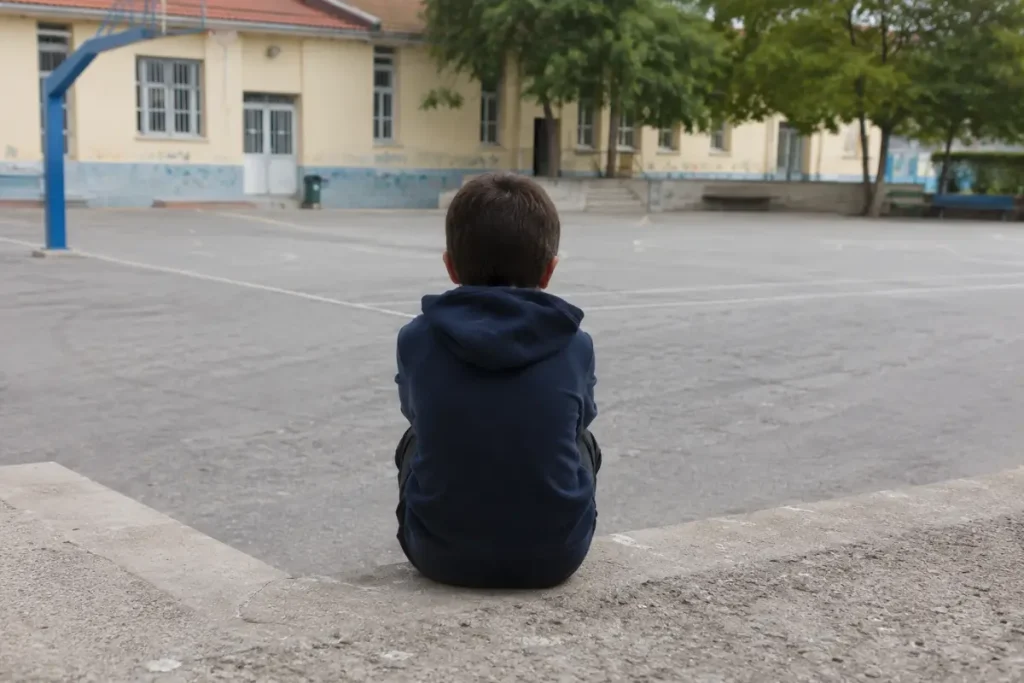
“He’s fine; he just doesn’t like school anymore.” That’s what a mom told me a while back, describing her 10-year-old son. He wasn’t eating breakfast. He’d started saying his stomach hurt every Monday. And yet, no one had thought of the word “bullying.” Until she did, one Sunday night, when the child burst into tears, saying he never wanted to go to school again.
If you’re reading this article, something has probably given you pause. Maybe a change in your child’s mood. Maybe a comment you overheard. Let’s take a look together at what bullying is in practice—not in theory—and what the real signs are, not the ones shown in movies, but the ones that appear in everyday life, often hidden.
What Is Bullying, Seriously?
Let’s start with the answer, without beating around the bush. Bullying is repeated, intentional behavior by an individual or a group aimed at hurting, humiliating, or controlling someone else, with an obvious or subtle power imbalance between them —the stronger against the weaker, the popular against the lonely, a group against an individual. The key word here is “repeated.” A single altercation between peers isn’t necessarily bullying—bullying is a pattern, not an isolated incident.
There are different types, and it helps to know them because they don’t all look the same. Physical bullying is the most visible—shoving, hitting, destroying property. Verbal bullying is more insidious—mocking, insults, nicknames that “stick.” Social bullying works through exclusion—“we don’t want you in our group,” spreading rumors, deliberate isolation. And then there’s cyberbullying, which we’ll look at separately below, because it has its own characteristics that make it even harder to detect.
Why Bullying Doesn’t Always Look Like Bullying
The problem with school bullying is that it’s rarely as clear-cut as we think. It’s not always one child hitting another during recess. Much more often, it’s verbal; it’s social exclusion; it’s mockery in group chats that parents never see. And most of the time, the child won’t come to you and tell you in a single sentence.
They’ll show it to you in other ways.
The Signs That Really Matter
Start with the changes, not the “symptoms” listed in a psychology book. A child who is being bullied often changes their behavior in ways that seem insignificant on their own, but not when you look at them together.
Physical signs first: headaches or stomachaches that occur mainly on school days, disturbed sleep, loss of appetite, or, conversely, overeating. School supplies that keep “going missing” or come back torn. Clothes that are stained for no apparent reason.
Then come the emotional signs. A child who used to be sociable and now avoids friends. Anger that flares up suddenly over trivial matters—because anxiety has to come out somewhere, and when it doesn’t come out in words, it comes out in outbursts. A drop in school performance, for no apparent reason. Withdrawal into their room, more screen time, less talking.
And there’s one sign that many parents completely overlook: the child starts speaking badly about themselves. “I’m stupid,” “nobody likes me,” “I don’t deserve friends.” These phrases aren’t just “a bad day.” They’re almost always a reflection of what someone else is saying to them.
Why Doesn’t Your Child Tell You This on Their Own?
This is the question I hear most often: “Why didn’t they tell me?” The answer has nothing to do with how close your relationship is. Children often stay silent out of shame—they feel it’s their own fault. Other times, they’re afraid that if they speak up, things will get worse. And sometimes, they simply don’t yet have the words to describe how they feel.
You don’t need to take it personally. You need to create space.
There’s something else, too—something even harder to admit: some children have learned, through experience, that when they share something difficult, adults react in a way that makes them feel worse—whether because the parent panics or because the reaction is “it’s nothing, it’ll pass.” Both extremes teach the same lesson: “I’d better keep this to myself.”
The bullying you can’t even see: cyberbullying
In the past, bullying stopped when a child walked through the door and closed it behind them. Today, it doesn’t stop anywhere. It continues in group chats, in comments under photos, in a “meme” circulating among classmates without the child even knowing when it started.
There’s something particularly cruel about cyberbullying: it’s relentless, and often anonymous. The child can’t “close the door”—the cell phone is always there, in their pocket, on the nightstand, next to their pillow. If you notice that your child gets anxious every time a notification pops up on their phone, or, conversely, completely avoids social media when they used to be on it all the time, this is a sign worth paying attention to. Don’t immediately snatch the phone away as a “solution”—this often makes the child feel like they’re being punished for something that isn’t their fault, and they’ll stop talking to you about what’s going on there.
How to talk to your child without scaring them even more
The language you use matters—much more than you think. If you say, “Who’s bothering you? I’ll go talk to the principal tomorrow,” your child will panic—they’ll be afraid that the situation will get worse, that they’ll be labeled a “snitch.” Try something calmer: “Whatever’s going on, we’ll figure it out together, at your own pace.”
Leave room for silence. Often, children speak more easily not when you’re looking them straight in the eye and waiting for an answer, but when you’re doing something together—a car ride, cooking a meal together. Indirect communication, without the pressure of direct eye contact, opens far more doors than you might expect.
And one more thing: don’t promise “I won’t tell anyone” if you know you’ll eventually have to inform the school. A broken promise here costs much more than an honest explanation: “If you tell me something serious, I might need to talk to an adult to protect you—but I’ll always tell you what I plan to do before I do it.”
What to Do When You Suspect Bullying
First step: don’t interrogate. The question “Is anyone picking on you at school?” very often elicits an automatic “no,” because the child feels like they’re on trial. Instead, try asking indirect questions. “Who’s been sitting next to you during recess lately?” “Is there anyone in your class you don’t really like?” Open-ended questions open doors that closed-ended ones shut.
Step two: listen without overreacting. I know it’s hard—a parent’s instinct is to get angry and want to go to the school right away. But if the child sees that the revelation causes a crisis, next time they’ll stay silent to protect you.
Step three: Talk to the school, presenting facts calmly, not making accusations. And fourth, perhaps most importantly: don’t expect the child to “get over it on their own.” Bullying leaves scars that aren’t always immediately visible—they may surface years later as low self-esteem, difficulty in relationships, or intense anxiety in social situations.
If you’d like to read more about how a child’s self-esteem is built after such experiences, we’ve written in detail about the signs of low self-esteem in children.
When to See a Specialist
You don’t have to wait for things to “get worse” before seeking help. If your child exhibits three or more of the signs I mentioned for a period longer than two to three weeks, that’s enough—we describe similar signs in our article on how to tell if your child is anxious, because anxiety and bullying often go hand in hand. You don’t need “proof” that someone is bullying them to seek support—all it takes is your concern.
A child psychologist doesn’t step into a child’s life to “fix” something that’s broken. They step in to provide a safe space where the child can say things they can’t say to anyone else—not even to you, no matter how much you love them. And at the same time, through parent counseling, they help you understand how to support your child without making them feel even more vulnerable.
Frequently Asked Questions from Parents
My child refuses to go to school—is this always a sign of bullying?
Not always. It could also be related to separation anxiety, difficulty with a particular subject, or a conflict that has nothing to do with bullying. But that doesn’t mean you should ignore it—it simply means you need to investigate without prejudice, using open-ended questions and keeping your voice calm.
Should I speak directly to the child who is bullying my child?
It’s best not to do this on your own, without the school’s involvement. As understandable as the impulse may be, a direct confrontation usually escalates the situation rather than resolving it, and may lead to retaliation against your own child. The school has the responsibility—and usually the tools—to handle the issue in a structured way.
How long does it take for a child to “recover” from bullying?
There is no set timeline. It depends on the duration and intensity of the experience, how early an adult intervened, and the support the child has around them. With the right support, most children regain their self-confidence—but the process takes time; there’s no need to rush.
If you recognize any of these signs in your child, you don’t have to deal with them on your own.
You can schedule an appointment for your child…
and together—you and a specialist—find a way for them to feel safe again—at school, at home, and within themselves.