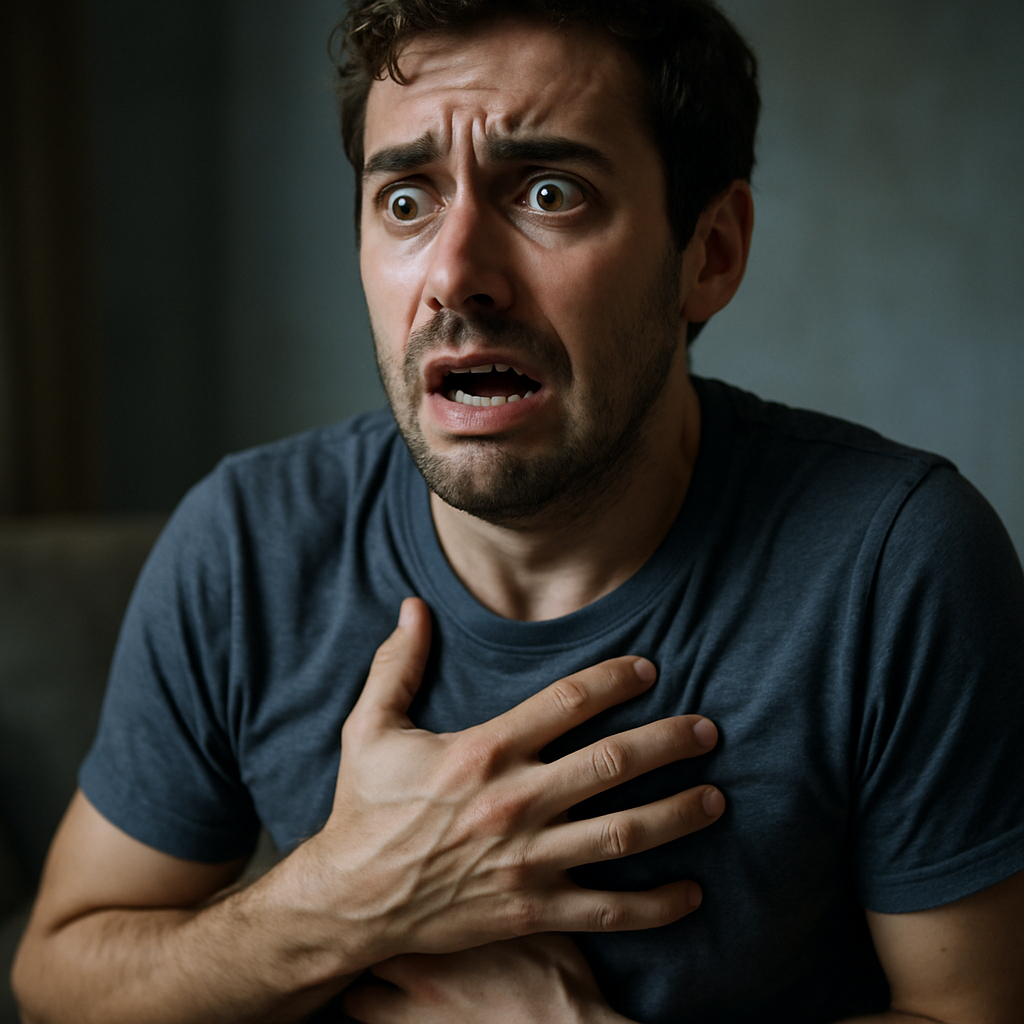
What is a panic attack – Why do we have panic attacks?
Suddenly, you feel your heart beating like crazy. You can’t breathe. You feel dizzy. You think you’re going to faint, or worse, that something terrible is happening to you. And yet… you’re not dying. You’re having a panic attack. The question, however, is different: Why do we have panic attacks?
A panic attack is an intense and sudden reaction of your body and mind to fear, even when there is no immediate external threat. Your body automatically activates its “alarm.” Just as it would if you saw a lion in front of you—only there is no lion.
Why do we have panic attacks?
There is no single answer to why we have panic attacks. Panic attacks have deep roots. Think of them as alarm bells ringing inside you, trying to be heard.
Usually:
- You have been under intense stress or pressure for a long time.
- You have suppressed emotions (anger, fear, shame) that have no outlet.
- You have experienced traumatic events or sudden changes in your life.
- You have a genetic predisposition or increased sensitivity of your nervous system.
Additional information: Many people who experience panic attacks do not understand this at first. They think they have an organic problem (e.g., heart), while their body is crying out for psychological relief.
How do you feel when you have a panic attack?
Symptoms vary, but some are common:
- Rapid heartbeat and shortness of breath.
- Trembling or sweating.
- Numbness in the hands or feet.
- Feeling of depersonalization (as if you are “out of your body”).
- Fear of death or loss of control.
- Chest pressure or nausea.
Panic attacks during sleep – When you wake up in terror
Is it possible to have a panic attack while sleeping? Yes, it can happen. It is not as rare as you might think. Even when resting, the brain processes unresolved anxieties. If you go to sleep stressed, your subconscious may “overflow” during the night.
What can you do when this happens?
First of all, remember that you are not experiencing anything fatal. No matter how scared you are, it is a passing attack.
In practice:
– > Recognize what is happening to you. Say to yourself: “This is a panic attack. It will pass.”
– > Focus on your breathing. Breathe in for 4 seconds – hold for 4 seconds – breathe out for 4 seconds.
– > Find something that brings you back to the present. Hold an ice cube, wash your face with cold water, touch something rough.
– > Avoid resisting. Instead of fighting it, see it as a wave that comes and goes.
Why do we have panic attacks—and how can we manage them over time?
The “key” is to understand what triggers it. That is, why we have panic attacks. Only then can we weaken it. This is where psychotherapy comes in.
The 3 most helpful approaches:
Cognitive-Behavioral Psychotherapy: Helps you recognize negative thoughts and replace them.
Psychodynamic Approach: Delves into the roots of anxiety and the patterns that “sabotage” you.
Body Psychotherapy: Releases anxiety through the connection between body and mind and the processing of emotional tensions, and examines how your relationships affect your psychological stability.
What to avoid:
Don’t obsessively Google your symptoms.
Don’t cancel outings or experiences for fear of having a panic attack.
Don’t try to hide it. You are not alone.
When to seek professional help? If panic attacks:
- They affect your daily life,
- They limit you in social or professional situations,
- They appear without any “logical” explanation…
Τότε χρειάζεσαι έναν άνθρωπο δίπλα σου που ξέρει πώς να σε ακούσει. Όχι κάποιον να σου δώσει λύσεις, αλλά να σε οδηγήσει να τις βρεις εσύ. Αντιμετωπίζεις ή νιώθεις πως αντιμετωπίζεις κάτι τέτοιο;
Simple, human, no pressure. A meeting to see if this path suits you.
Why do we have panic attacks? Here’s something very important before we finish
A panic attack is not a weakness. It is a cry for help. Don’t ignore it. Listen to it. It is equally important to find out why we have panic attacks. And if you don’t know what and how, let’s figure it out together.